
You can make your online activities secure by keeping your identity secret. It is an active platform in areas such as electronic products, services and even information sharing. First of all, we will review the tools and methods you need, keeping your security at the forefront by using a secret connection. "Privacy is not a luxury—it’s a right." — Edward Snowden Stay curious, but always prioritize your security.
Dark Web Login Guide
Accessing the dark web requires navigating beyond standard search engines into a network of anonymized sites, often associated with privacy-conscious users and illicit markets. Unlike the surface web, a dark web login guide is essential because these hidden services demand specific tools and careful practices to protect identity and data. This guide provides a structured approach to entry, focusing on security, server configuration, and account management within the Tor ecosystem.
- You can access all of these directories via the surface web.
- If you choose to pursue exploring any sites on the dark web, you put yourself at risk of being singled out and targeted for hacks and more.
- Generally, it’s important to use Tor responsibly and in accordance with local laws and regulations.
- If you’re thinking of connecting to the dark web for the first time, here are some steps to ensure that you don’t fall into malicious hands or legal trouble.
- Freenet is similar to I2P – you can only connect to sites within Freenet’s own network.
Prerequisites for Dark Web Access
Before any login attempt, you must establish a secure foundation. The Tor Browser is the primary gateway, routing traffic through multiple encryption layers. Do not use standard browsers like Chrome or Firefox without modifications, as they expose your IP address.
- Download Tor Browser from the official project website (avoid third-party mirrors).
- Verify the file's signature using GPG to ensure authenticity.
- Use a VPN as an additional layer to obscure Tor entry node detection from your ISP.
- Disable JavaScript in Tor Browser’s security settings (set to "Safest" mode) to prevent remote code execution during login.
Finding and Accessing Hidden Services
Dark web sites use .onion domains, which are not indexed by Google. To locate login pages, you must use curated directories:
- Locate a verified .onion link through forums like Dread or The Hidden Wiki (cross-reference with at least two sources).
- Open the link in Tor Browser—do not click on shortened URLs from unverified sources.
- Check the SSL certificate if present; some markets use self-signed certs but avoid ones that trigger red warnings.
- If the page asks for a CAPTCHA, complete it manually—never use automated scripts.
The Login Process: Credentials and Authentication
Most dark web platforms require username and password combinations, often with two-factor authentication (2FA). Here’s a systematic approach:
- Create a unique alias—never reuse credentials from surface web accounts.
- Use a password manager (e.g., KeepassXC) that stores data locally, not in the cloud.
- For 2FA, prefer TOTP apps over SMS-based codes, as SMS is traceable.
- Enter login details directly into the .onion page—do not paste from clipboard if the environment is untrusted.
- After login, clear browser state via Tor’s "New Identity" button to sever session continuity.
Common Pitfalls During Dark Web Login

Many newcomers encounter issues that compromise security or lock accounts. Avoid these errors:
- Using outdated Tor versions—always update to the latest release to patch vulnerabilities.
- Logging into sites without HTTPS—while .onion traffic is encrypted through Tor, the final hop may not be; look for http:// but treat plain HTTP with suspicion.
- Sharing your private key or PGP signature—markets often require PGP for message verification, but never upload your private key during login.
- Ignoring captcha failures—repeated wrong attempts can IP-ban your Tor exit node.
FAQs About Dark Web Login Guide
Q: Do I need to register an account for every dark web site?
A: Yes, most marketplaces and forums require registration. Be prepared to provide a valid PGP key for encryption during sign-up.
Q: Can I use a smartphone for dark web login?
A: It is discouraged due to weaker anonymity—Android apps like Orbot exist, but desktop Tor Browser is far more secure for login.
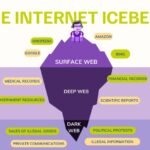
- However, the surface web contains about 4 to 5% of the internet’s content.
- The process of onion routing takes your traffic, encrypts it, and bounces it among at least three relay points (or nodes), which makes it almost impossible to trace the source of the data.
- All offer strong encryption and don’t store logs, ensuring all online footsteps are completely masked.
- If you’re on the dark web to engage in illegal activity and your traffic passes through a compromised exit node, your secrets can be exposed.
- Well, now it’s time to fire up Tails and do a little bit of tinkering.
Q: What if I forget my password on a dark web site?
A: There is no password recovery for many hidden services. Store credentials offline in a encrypted container; expect no email reset options.
Q: Is it safe to save login cookies in Tor Browser?
A: No. Cookies can be used to correlate sessions with your identity. Always start each session with a fresh Tor circuit.
After Login: Maintaining OpSec
Once authenticated, your behavior determines risk. Use end-to-end encryption for private messages (e.g., via PGP or Signal). Avoid uploading personal photos, links to social media, or real-world identifiers. Monitor for phishing attempts—clone sites often mimic login pages to harvest credentials. Immediately change passwords if a site leaks data or goes offline unexpectedly.
Remember: the dark web login guide is not a one-time step but a continuous practice of verifying every site, tool, and connection. Adjust security settings based on the sensitivity of the service; a forum for whistleblowers demands stricter precautions than a generic blog.