

Dark Web Onion
The term Dark Web Onion often evokes images of encrypted marketplaces and anonymous browsing. At its core, this refers to websites hosted on the Tor network, a system designed to anonymize both the user and the host. These sites use a special .onion top-level domain, ensuring that their true IP addresses are concealed behind layers of encryption—much like the layers of an onion. While often associated with illicit activities, the Dark Web Onion also serves legitimate purposes, such as protecting whistleblowers, journalists, and activists in repressive regimes.
- It’s not just a great series – it’s arguably the platform’s greatest achievement in science fiction storytelling.
- The series finale features Soap&Skin's cover of "What a Wonderful World" and Nena's "Irgendwie, irgendwo, irgendwann", the latter which is played over the end credits to close out the series.citation needed
- In an argument with Helge (revealing that the abducted boys died from Noah's attempt to create a time machine) Noah states his mission to free humanity, likening himself to the Biblical Noah.
- In 2020, Claudia and Jonas — apparently still alive — go to the abandoned power plant and find the God Particle in a dormant state.
- The adult Elisabeth and Charlotte from 2053 travel to 2041, kidnap baby Charlotte, and deliver her to Tannhaus.
In 2052, the elderly Claudia sends the adult Jonas on his 2019 mission to Winden. Aleksander and Charlotte open the barrels at the power plant, unleashing the apocalypse in Eva's world. Bartosz encounters his adult self, sent by Eva alongside the other acolytes of Erit Lux (transl. Let There Be Light, her world's counterpart to Sic Mundus). The young Martha of Eva's world travels to the day of the apocalypse. In 2020, Claudia and Jonas — apparently still alive — go to the abandoned power plant and find the God Particle in a dormant state.
How Does a Dark Web Onion Site Work?
Accessing a Dark Web Onion site requires the Tor Browser, which routes your connection through multiple volunteer-operated nodes. Each node peels away a layer of encryption, revealing only the next destination. This process ensures that no single node knows both the origin and the final website. Onion services are distinct because they host within the Tor network itself, using a 40-character cryptographic hash as their address.
- End-to-End Encryption: Traffic between the user and the onion site is fully encrypted, preventing eavesdropping.
- Hidden Service Protocol: The server remains anonymous by not revealing its actual IP address.
- Ephemeral or Permanent: Some onion sites are temporary, while others have persisted for years, like the now-defunct Silk Road.
Common Uses of Dark Web Onion Domains
Contrary to popular belief, not all Dark Web Onion sites are illegal. Below are categories of services found on the network:
- Privacy-focused email providers (e.g., ProtonMail onion mirror)
- Whistleblowing platforms like SecureDrop
- Cryptocurrency mixers and wallets
- Academic research databases that avoid censorship
- Forums for free speech discussion, often moderated by activists
Risks and Legal Considerations
Navigating the Dark Web Onion landscape carries risks. Many sites host phishing scams, malware, or illegal marketplaces. Authorities actively monitor .onion domains, and while the Tor network provides anonymity, it is not foolproof. Users can be deanonymized through traffic correlation attacks or compromised exit nodes. It is crucial to avoid downloading files from untrusted onion sites and to use a VPN as an additional layer of protection.
Frequently Asked Questions (FAQs)
Q: Can I access a .onion site using a regular browser?
A: No. Standard browsers like Chrome or Firefox cannot resolve .onion addresses. You must use the Tor Browser or a compatible proxy.
Q: Are all Dark Web Onion sites illegal?
A: No. While some host illegal content, many are used for privacy, journalism, and bypassing censorship. The legality depends on the content and your jurisdiction.
Q: How do I find new .onion sites?
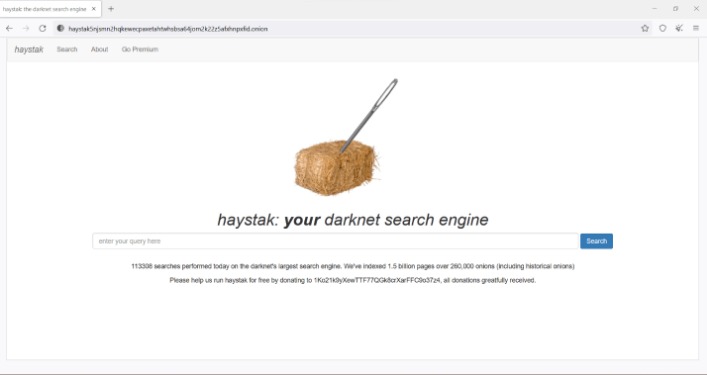
A: Use directories like the Hidden Wiki (be cautious—many links are outdated or malicious), or explore via search engines like Ahmia, which indexes onion pages.
Conclusion
The Dark Web Onion remains a dual-edged tool: a haven for privacy advocates and a breeding ground for cybercrime. Understanding its technical foundation—layered encryption, hidden services, and the Tor protocol—is essential for anyone curious about this hidden corner of the internet. Whether used for ethical purposes or not, the onion continues to symbolize anonymity in the digital age.