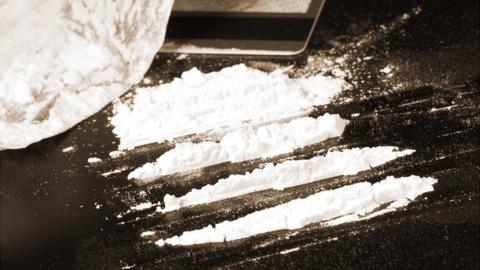

Dark Web Drugs Bitcoin
Adam tells adult Noah to retrieve Claudia's diary in preparation for an "apocalypse" that will occur on 27 June 2020. Noah tells Bartosz that Claudia is their main adversary, and that the adult Jonas, unwittingly, is about to create the wormhole. The Stranger leaves to destroy the wormhole using the brass machine, which Tannhaus has completed from the broken version brought by the adult Jonas and Ulrich's smartphone. Jonas wakes in the bunker, accompanied by the Stranger, who reveals himself to be the adult Jonas. In an argument with Helge (revealing that the abducted boys died from Noah's attempt to create a time machine) Noah states his mission to free humanity, likening himself to the Biblical Noah. In 2019, Mikkel's family struggles not to turn against each other, Regina discovers that she has breast cancer, and Ulrich learns that his father was having an affair with Claudia at the time of Mads' disappearance.
The intersection of the dark web, illicit narcotics, and bitcoin has created a clandestine economy operating beyond the reach of traditional law enforcement. Since the rise of Silk Road in 2011, digital currencies have become the primary medium for purchasing drugs anonymously, leveraging encrypted networks and decentralized ledgers. Despite crackdowns and market closures, this ecosystem persists, evolving with new technologies and currencies to evade surveillance.
Principal photography for the second season took place on location in Berlin from June 2018 until November 2018. The gates to the power plant are those at the Olympic Stadium Bell Tower; the nuclear reactor towers were computer-animated. Jonas and Martha travel to the origin world through the passage in the cave and successfully save Tannhaus' family, thereby erasing both worlds from existence. G. Tannhaus created a time machine to prevent the death of his family, inadvertently destroying his world and splitting it into the worlds of Adam and Eva. In 2052, the elderly Claudia sends the adult Jonas on his 2019 mission to Winden. Aleksander and Charlotte open the barrels at the power plant, unleashing the apocalypse in Eva's world.
Bitcoin remains the backbone of dark web drugs bitcoin transactions, despite its pseudo-anonymous nature. Sellers and buyers use mixing services to obfuscate transaction trails, while markets like AlphaBay and Empire Market facilitated billions in trades before being seized. However, the shift to privacy coins like Monero—which hides sender and receiver data—is growing. Still, bitcoin dominates due to its liquidity and widespread acceptance, making dark web drugs bitcoin exchanges a persistent challenge for regulators.
- Amidst the apocalypse in 2020, Jonas and the "other" Martha travel to a parallel world where Jonas was never born; Martha explains that this was the day she met him, then disappears.
- The young Martha of Eva's world travels to the day of the apocalypse.
- The season received a rating of four out of five from Jack Seale of The Guardian and Boyd Hilton of Empire, a B+ grade from Hanh Nguyen of IndieWire, and an "amazing" score of 9 out of 10 from David Griffin of IGN.
- Egon deduces that she knows about time travel and is selfishly using the caves for her own gain.
- Meanwhile, BuzzFeed listed it as one of the 25 best TV shows of all time.
How Transactions Work
The process begins with acquiring bitcoin from a legal exchange, then moving funds through multiple wallets and tumblers to break the chain. On markets, vendors list drugs—from cannabis to fentanyl—priced in bitcoin, with escrow systems holding payments until delivery. Buyers rely on PGP encryption for communication, and packages are shipped discreetly. Law enforcement uses blockchain analysis to trace dark web drugs bitcoin flows, but sophisticated users layer coins through decentralized exchanges to avoid detection.
Risks include seizure, exit scams, and undercover stings. For example, the 2019 Wall Street Market collapse led to global arrests. Yet, the demand for anonymous transactions sustains dark web drugs bitcoin channels. Vendors often accept only bitcoin for high-value deals, while smaller purchases may use Litecoin or Ethereum.
Regulatory and Security Implications
Governments have attempted to curb dark web drugs bitcoin by regulating crypto exchanges and deploying chain analysis tools. The FATF mandates know-your-customer (KYC) rules for exchanges, complicating cash-out processes. However, peer-to-peer trading and decentralized exchanges undermine these efforts. Security remains a dual-edged sword: bitcoin’s transparency helps trace high-profile traffickers, but its immutability also ensures permanent transaction records, which savvy criminals adapt to.
Looking ahead, the fusion of dark web drugs bitcoin with AI-driven marketplaces and quantum-resistant cryptography could further entrench this underground economy. For now, bitcoin remains both a tool for illicit commerce and a focal point for digital crime fighting—a paradox that will define the next decade of online black markets.